One Ridge Only
Endemism at the scale of a mountain, and how the boundaries between close relatives are worked out.
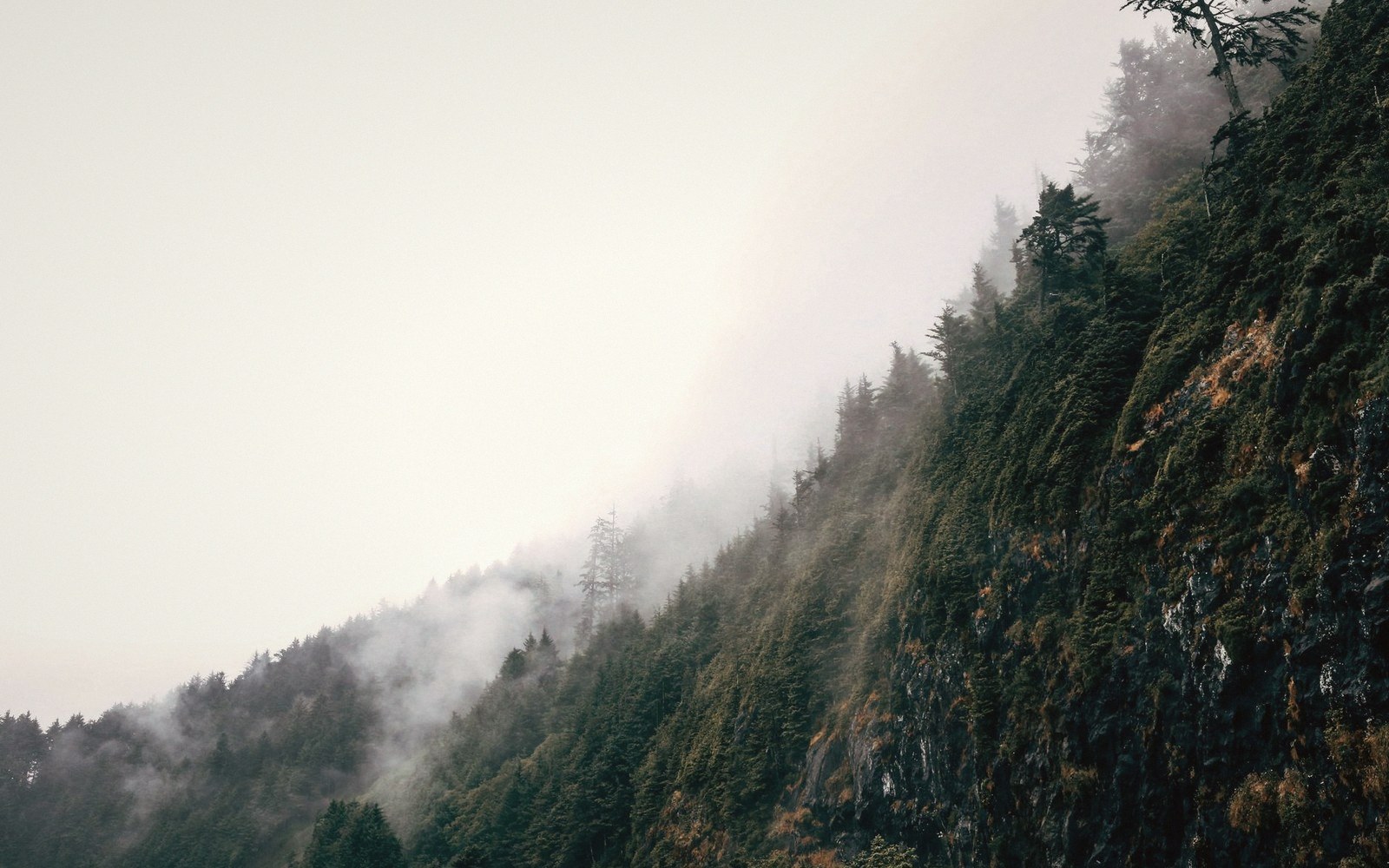
When a mountain is the whole world
A species whose entire range fits inside a single county is already remarkable. A species whose range fits inside a single ridge — one drainage, one slope, one narrow belt of elevation — is something else. The Southern Appalachians produce both, and the mechanism is the same in each case: a landscape old enough and topographically complex enough to have isolated populations for millions of years, long before the concept of a species existed to describe what isolation was doing to them.
Salamanders are the clearest example. The plethodontids — the lungless family that breathes through moist skin — are exquisitely sensitive to dispersal barriers. A dry ridge, a gap between watersheds, a stretch of unsuitable elevation: any of these can stop gene flow as effectively as an ocean. And because the mountains were never glaciated, populations that became isolated stayed isolated, accumulating mutations across geological time rather than being reset by ice. The result is a fauna where sister species sometimes live on adjacent ridges and nowhere else on Earth.
Where one species ends and another begins
Working out where the boundary falls requires more than a field notebook. The classic approach is morphology — counting costal grooves (the vertical folds along a salamander's flank), measuring snout-vent length, comparing coloration. For most of the twentieth century, that was the tool available, and taxonomists including Richard Highton spent careers using it to untangle what looked like continuous variation across the mountains into discrete, nameable lineages.
Highton's work on the Plethodon glutinosus complex — the slimy salamanders — revealed that what had been treated as a single wide-ranging species was in fact a cluster of at least a dozen, each occupying a defined piece of the landscape.
Molecular phylogenetics sharpened the resolution considerably. When mitochondrial and nuclear sequence data became routine, some boundaries that morphology had placed in the wrong valley shifted. Others that nobody had suspected appeared. A population long lumped with its neighbors turned out to have been genetically isolated for several million years. The mountain became a map of separations too old to see in scale or color but legible in nucleotide sequence.
The Balsam Mountains, the Nantahala range, the Black Mountains — the range that carries Mount Mitchell, the highest ground east of the Mississippi — each harbor forms whose distributions are measured in ridge-miles rather than state boundaries. Plethodon jordani, the red-cheeked salamander, is largely confined to the Great Smoky Mountains. Its near relative P. teyahalee occupies adjacent terrain to the west.
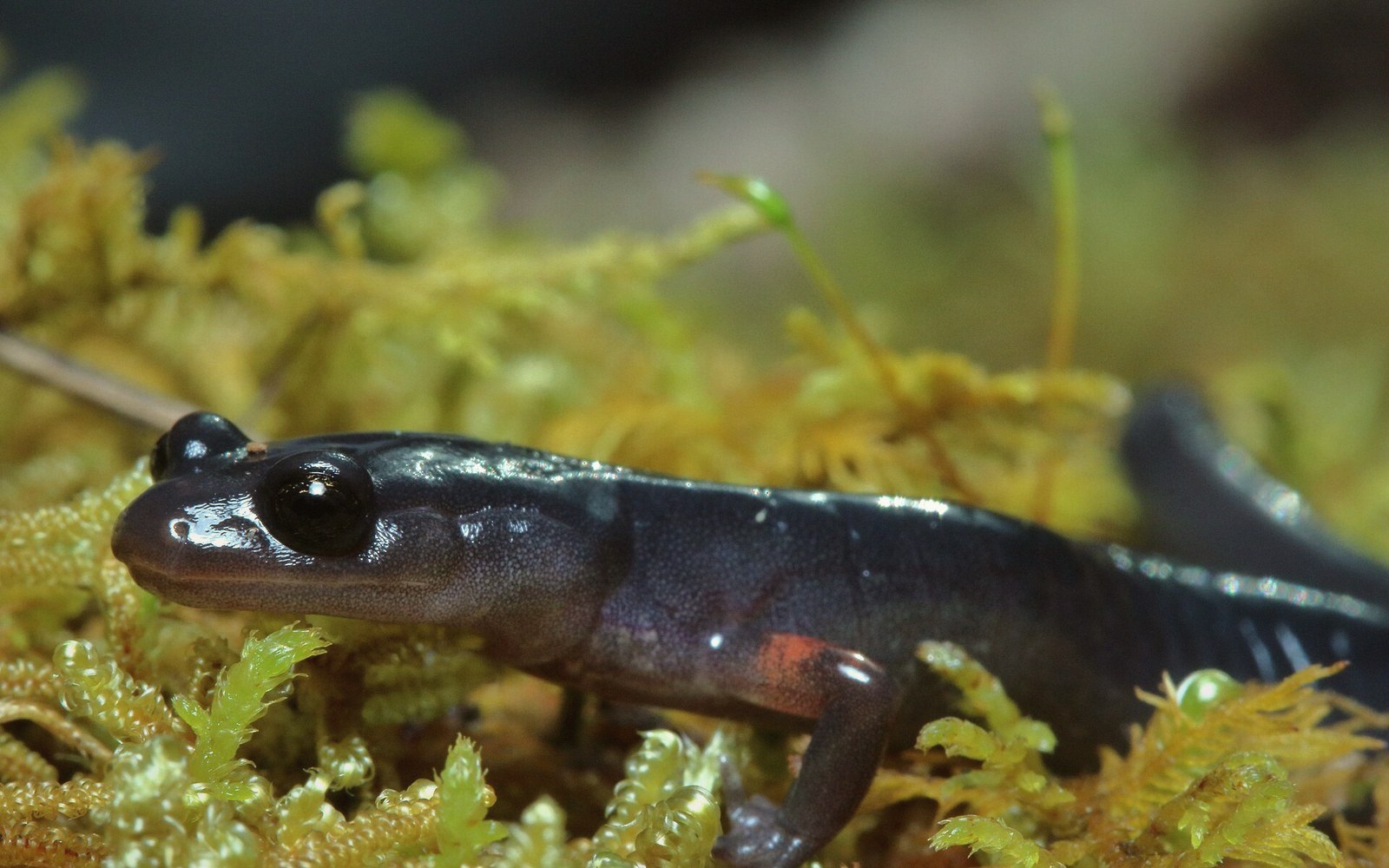
Where their ranges meet, the two hybridize in a narrow contact zone — a seam of genetic mixing a few kilometers wide that has persisted for long enough to become itself a subject of study. Contact zones of this kind are laboratories in miniature: they show how reproductive isolation proceeds, whether it is complete, and what happens when it is not.
Key concepts
- Costal groovesthe vertical folds on a salamander's flank, used as a morphological character in species identification
- Contact zonea narrow belt where two closely related species meet and hybridize; its width and stability reveal how far reproductive isolation has progressed
- Plethodon glutinosus complexa cluster of slimy salamander species, once treated as one, that Richard Highton's work disaggregated into more than a dozen named forms
- Mitochondrial vs. nuclear datadifferent molecular clocks that together date the timing of population splits
The all-taxa inventory launched by Discover Life in America ↗ in Great Smoky Mountains National Park brought some of this finer structure into sharper focus for the national park landscape specifically, adding confirmed locality records and prompting targeted surveys in under-sampled drainages. Endemism that had been suspected on biogeographic grounds became documented in particular streams. The inventory is ongoing; the number of confirmed species still moves.
What makes ridge-level endemism worth understanding — beyond the immediate fact of these salamanders — is what it implies about the fragility of the pattern. A species confined to a single watershed has no reservoir elsewhere. Habitat loss at that precise location is not local decline; it is global extinction.
Forest fragmentation, stream acidification, climate-driven shifts in the moisture regime that makes wet litter habitable: all of these press on ranges that have no room to contract. The mountain was the whole world for long enough to produce these lineages. It must remain habitable at exactly that scale to keep them.