Lungless
Plethodontids breathe through skin, which requires permanently damp ground, ties them to a slope and is why a single ridge can hold a species found nowhere else.
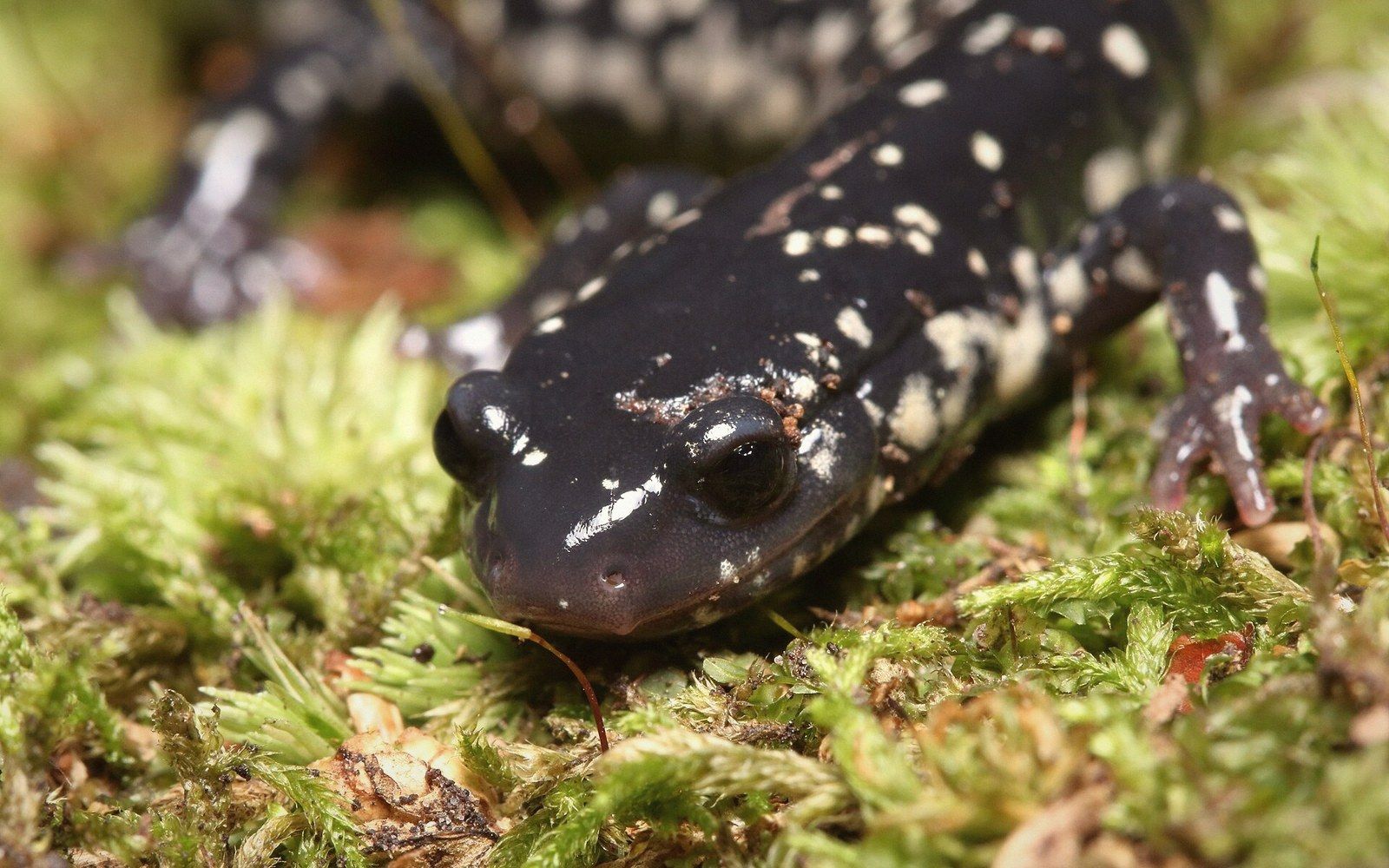
Skin is the organ; the slope is the range
Plethodontids — the lungless salamanders — dispensed with lungs somewhere in the Cretaceous and never looked back. The approximately 470 species in the family Plethodontidae make up the majority of all living salamanders, and the Southern Appalachians hold a concentration of them matched nowhere else on Earth: more than 30 species breeding on the same few thousand square kilometres of ancient, never-glaciated highlands.
That density is not an accident. It is the direct consequence of a respiratory system that ties each animal to its substrate with a grip closer to a plant than to most vertebrates.
The mechanics are straightforward. A plethodontid salamander exchanges gases across its skin and the moist membrane lining its mouth. No lung, no rib-driven bellows, no vocal sac. The surface area must remain continuously wet — dry skin is not merely uncomfortable but fatal within hours, because the animal cannot draw oxygen. Every decision the creature makes, every meter of elevation it inhabits, every overhang it shelters under, is downstream of this single constraint.
It cannot survive on the exposed ridge top, cannot cross the drying road verge between two hollows, cannot move through the leaf litter in a drought year the way it might in a wet one. The organism is, in the most literal sense, the moisture regime of the slope where it lives.
How a constraint becomes a species factory
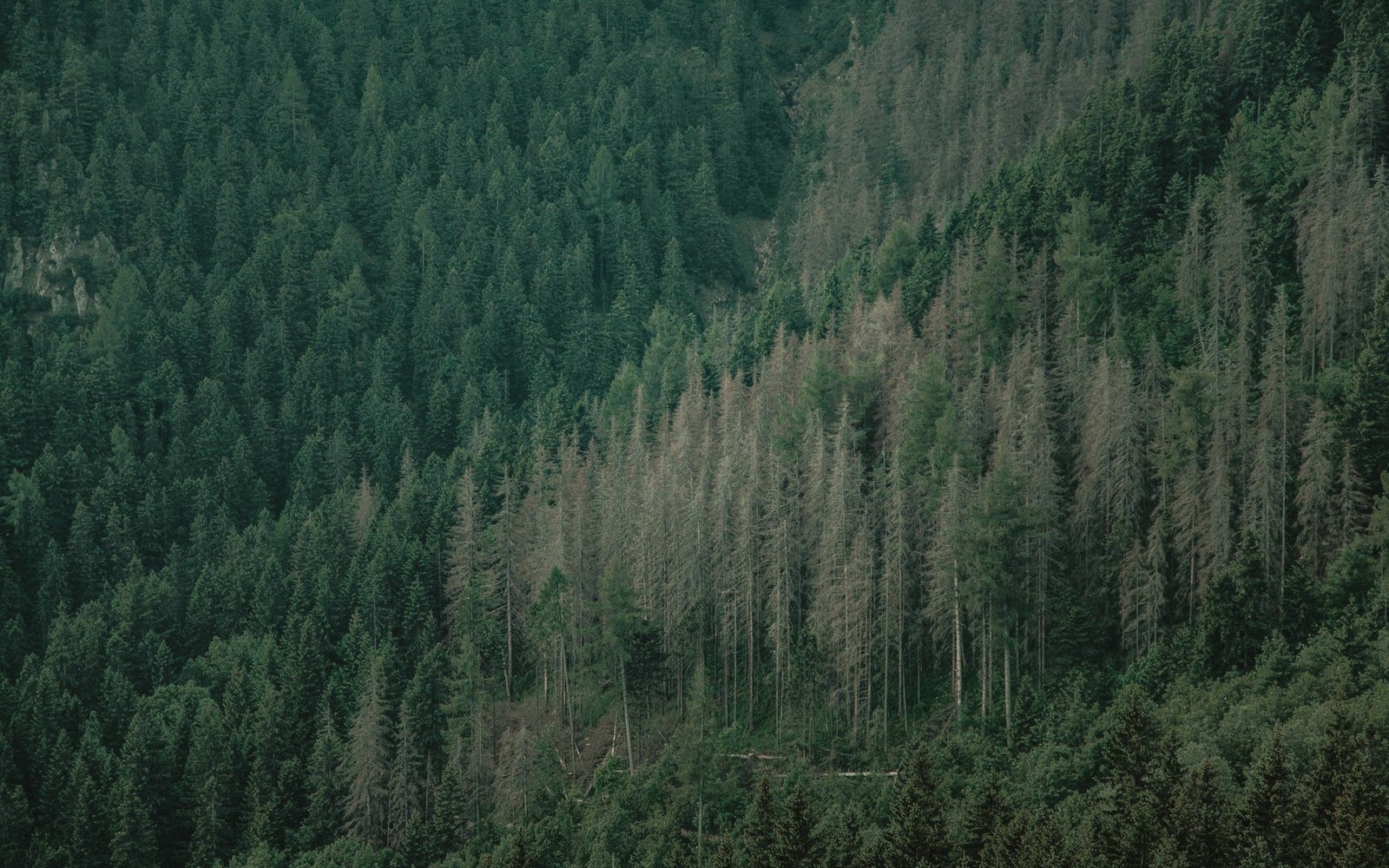
The Southern Appalachians are not merely wet; they are complexly wet. Orographic lift — air forced up the escarpment and cooling as it rises — deposits enormous quantities of rain and cloud moisture on south-facing and north-facing slopes differently, on ridge crests differently from cove forests tucked below them, on Roan Highlands balsam-covered slopes differently from the rocky talus of Linville Gorge. This produces a mosaic of moisture pockets at the scale of a few hundred vertical metres, each one subtly distinct in temperature, humidity and surface chemistry.
For a lungless salamander, these micro-gradients are walls. A species that has spent tens of thousands of generations evolving its skin permeability, its reproductive timing and its tolerance of particular fungal communities to one particular cove or one particular ridgeline faces a desiccation gauntlet if it tries to cross the next dry saddle to colonise an adjacent hollow.
It does not cross. Populations diverge. Over enough time — and the Appalachians have been providing that time since before the Alps existed — they diverge enough to become distinct species. The mountains' age and their moisture complexity work together to produce endemism at scales that astonish biogeographers: species whose entire world range fits comfortably on a county map, or smaller.
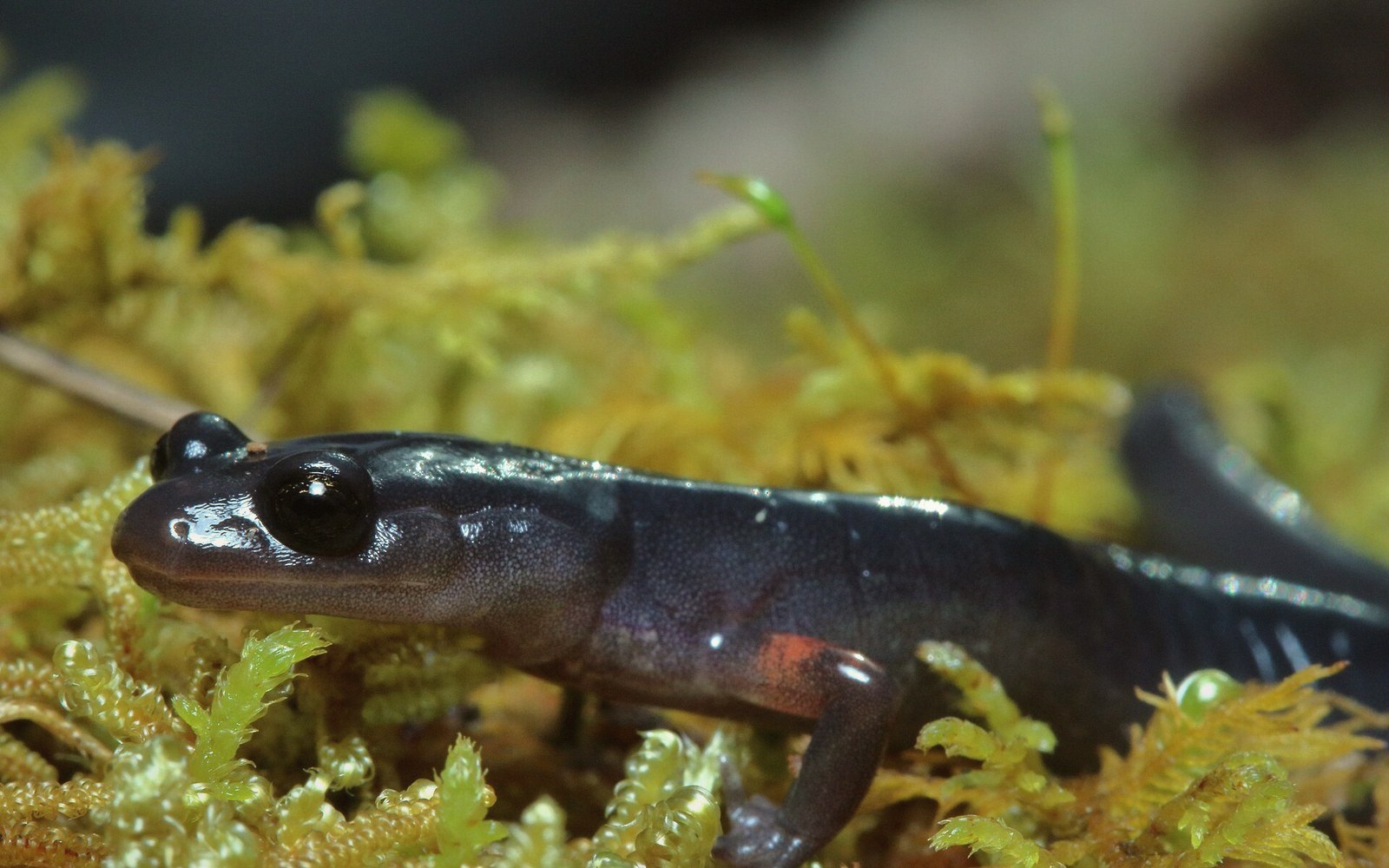
The genus Plethodon illustrates this best. The woodland plethodons are mostly terrestrial, lungless, direct-developing — they skip the aquatic larval stage entirely, completing development inside the egg and hatching as miniature adults. This breaks the last tie to standing water, paradoxically freeing them to colonise any ground that stays damp enough, while simultaneously making each population more isolated than an aquatic species would be.
The Peaks of Otter salamander is found only on a single ridge system in the Virginia Blue Ridge. Jordan's salamander occupies the Great Smoky Mountains. The Yonahlossee salamander tracks the Blue Ridge Escarpment. These are not subspecies shading into each other; they are distinct, reproductively isolated lineages, arranged across the range like postage stamps on an envelope.
What the naturalists found, and what they were really documenting
André Michaux walked these slopes in the 1790s collecting plant specimens, barely registering the animals in the leaf litter. When Elisha Mitchell was measuring the Black Mountains in the 1840s, the taxonomy of Appalachian salamanders was almost entirely unknown; the first serious descriptions of plethodontid diversity came from the later nineteenth century onward, and the full scope of that diversity took most of the twentieth century to map.
Asa Gray's insight that Southern Appalachian plants showed affinities with East Asian flora — an observation that pushed understanding of the range's age and biogeographic isolation — applies equally well to its salamanders. Isolation, time and topographic complexity produced richness in both kingdoms.
The respiratory constraint
- Plethodontidlungless salamander; breathes through skin and mouth lining
- Direct developmenteggs hatch as miniature adults, no aquatic larval stage
- Philopatrytendency to remain at or return to the birthplace; key driver of isolation
- Desiccationfatal drying of the skin surface; defines the animal's habitat ceiling
The modern accounting accelerated dramatically when Discover Life in America ↗ launched the All-Taxa Biodiversity Inventory in Great Smoky Mountains National Park in the late 1990s, an effort to name every species present in the park. Salamander work within that project systematically confirmed the distribution of known species and contributed to the eventual description of new ones. What the inventory made visible, above all, was how fine-grained plethodontid distribution actually is: species boundaries that correspond not to major geographic features but to the moisture gradients between one drainage and the next.
Key numbers and scales
- Some species' entire global range fits within a single county or smaller
- ATBI launched in Great Smoky Mountains National Park in the late 1990s
Because plethodontids develop directly from egg to miniature adult without a free-living larval stage, they disperse far less than aquatic species. A generation born in a north-facing hollow under yellow buckeye and basswood may spend its entire life within a few dozen metres of where it hatched.
Over millennia, that philopatry — site fidelity — lets populations accumulate genetic differences in isolation. The result is a system in which, as several researchers have noted, you can sometimes predict a species boundary by reading the vegetation and the slope aspect on a topographic map, before you have turned over a single rock.
The margin and what threatens it
An organism that lives at the boundary of what its skin can manage does not have much give. Any factor that reduces ambient moisture — climate-driven shifts in precipitation seasonality, canopy loss from hemlock woolly adelgid or balsam woolly adelgid, increased evapotranspiration as summers lengthen — compresses the habitable zone. A species already confined to one ridge loses elevation at the bottom of its range faster than it can gain it at the top, and for the highest-elevation specialists, there is no top left to move into.
The skin that made plethodontids so spectacularly successful as colonists of complex terrain — the adaptation that let them partition moisture gradients too fine for any other vertebrate group to exploit — is the same feature that makes them reliable indicators of whether a forest floor is drying.
When population counts in a particular cove start declining, the salamanders are not failing to adapt; they are accurately reporting what the duff layer and the soil humidity have already done. They are, in effect, the living record of the slope's moisture, written in species rather than in words.