Spruce and Fir
Red spruce and Fraser fir stranded on the highest ground since the last glaciation, a boreal island in a temperate range.
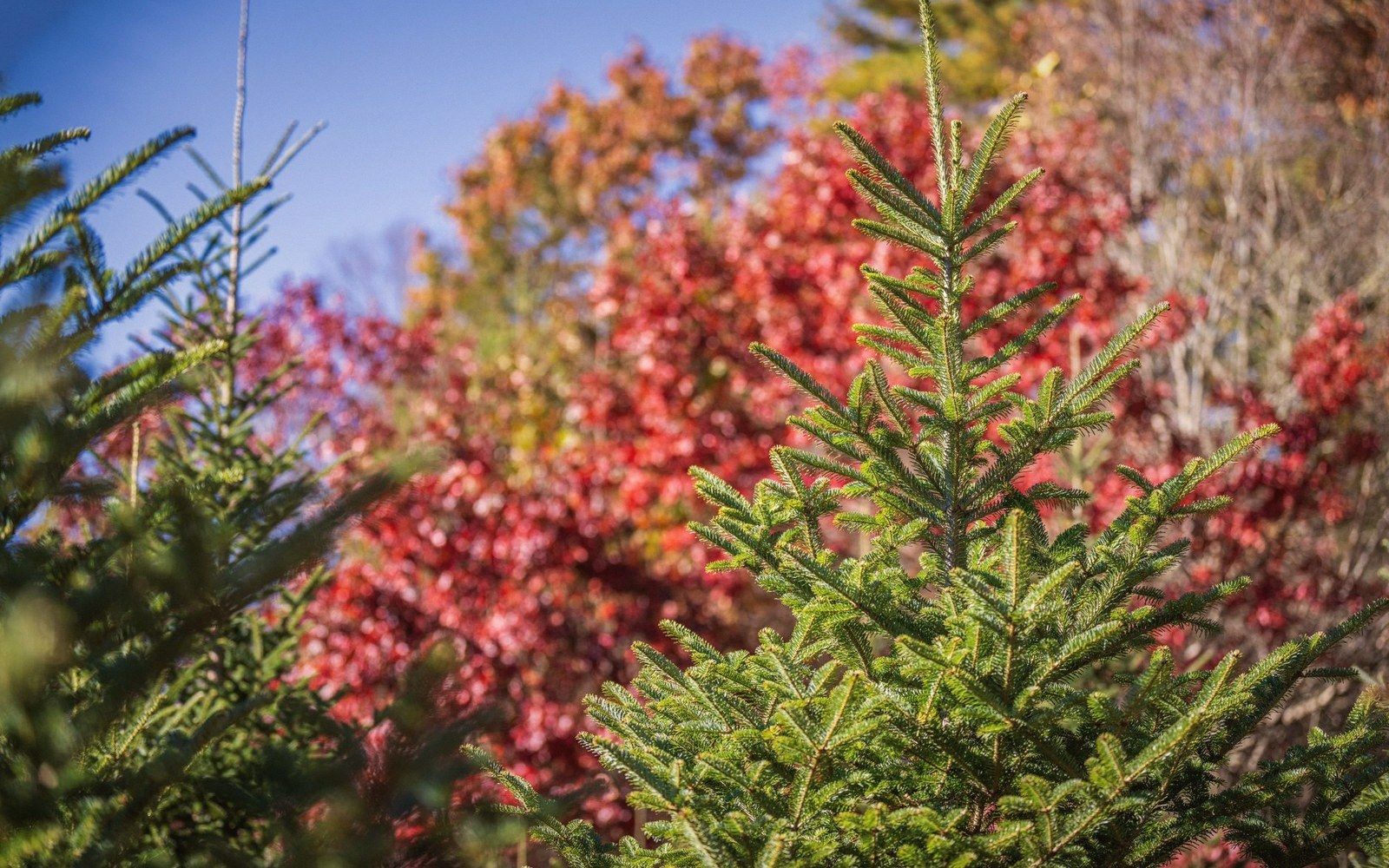
Boreal islands above the clouds
Red spruce and Fraser fir do not belong here in any simple climatic sense. They are cold-forest species — organisms whose ecological home is the boreal zone of Canada — and their presence on the summits of the Southern Appalachians is a consequence of deep time rather than current conditions. During the Pleistocene, as glaciers advanced across the continent and temperatures dropped sharply, spruce-fir forest pushed south and downslope.
When the ice retreated and warmth returned, the forest followed the cold upward and got stranded. What remains above roughly 1,500 metres on the highest ridges of the Black Mountains, the Great Smoky Mountains, and the Roan Highlands is a chain of boreal islands, each separated from the next by miles of hardwood forest and warm valley air.
Key numbers
- Fraser fir: endemic species, found nowhere on Earth outside the Southern Appalachians
- Mature fir mortality in some adelgid-affected stands: exceeded ninety percent
- Two metres-plus annual precipitation on the highest ridges, partly as cloud immersion
The two species divide the canopy between them in a predictable way. Red spruce (Picea rubens) occupies the broader zone, appearing well below the summit ridges and tolerating a wider moisture range. Fraser fir (Abies fraseri) — a species found nowhere else on Earth — pushes higher, dominating the wettest, coldest, most exposed ground.
At the very summit of Clingmans Dome or along the spine of the Black Mountains toward Mount Mitchell, the forest is almost entirely fir. That tight endemism is the product of isolation: a population cut off from its northern relatives long enough to diverge into something taxonomically distinct. The nearest relative, balsam fir, grows far to the north; Fraser fir is the Southern Appalachian version, shaped by its island.
The conditions that sustain this forest are extreme by any regional standard. Summit ridges receive precipitation that can exceed two metres annually, much of it delivered as cloud immersion rather than rain — fog that deposits water directly onto needles and bark. Elevation keeps the high peaks colder than the valleys below by a margin that effectively reproduces a more northerly latitude.
The result is an ecosystem that functions more like coastal Maine or maritime Quebec than like the temperate deciduous forest a thousand metres below it. Soils are thin, acidic, and perpetually waterlogged, and the understory is dense with mosses and liverworts that depend on the same persistent moisture.
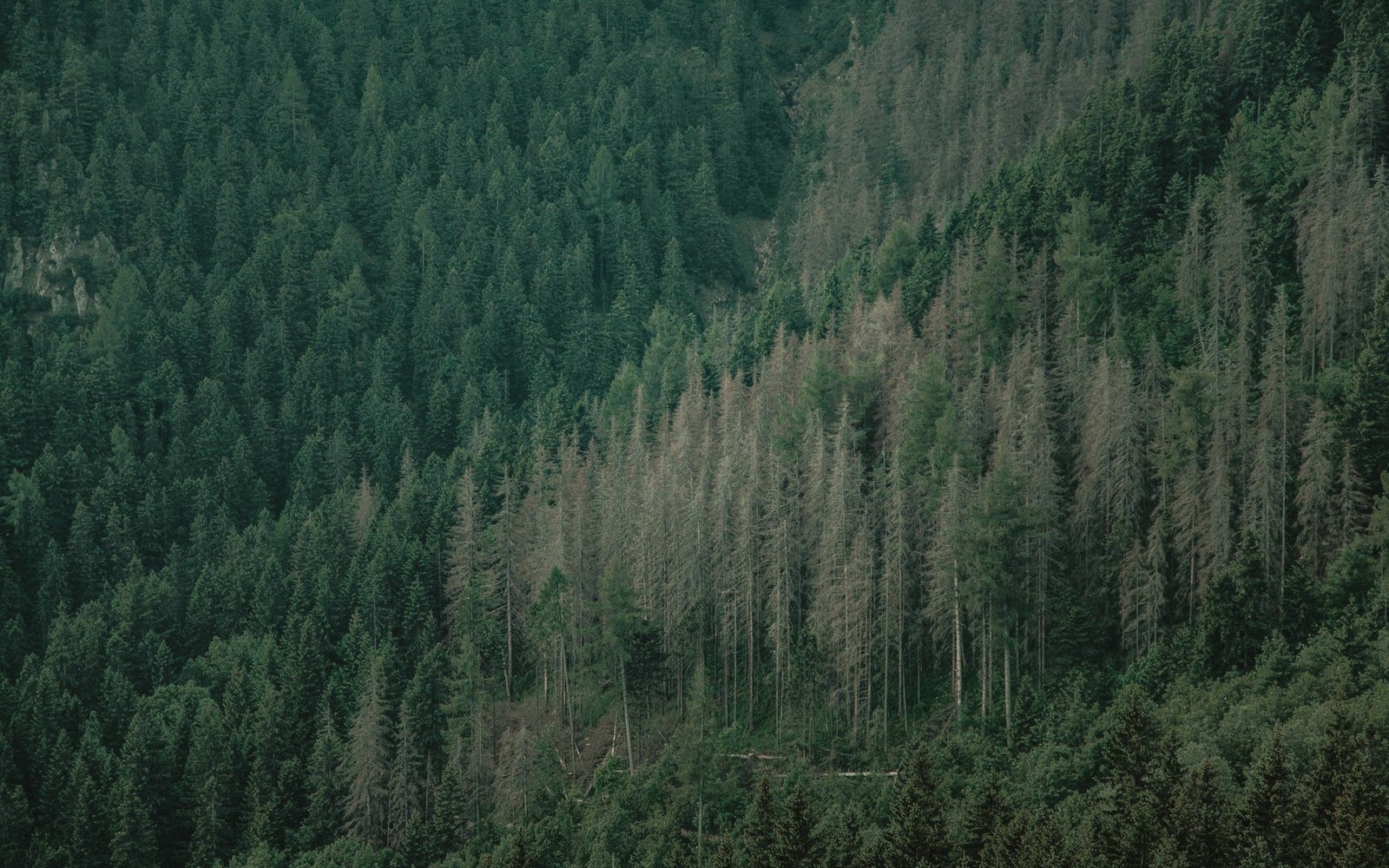
The vulnerability of this forest is proportional to its isolation. A boreal relict stranded on a mountaintop has nowhere to go. Climate pressure from below shrinks its lower margin; there is no higher ground to retreat to. But the more immediate crisis is biological. The balsam woolly adelgid (Adelges piceae), an introduced insect from Europe first detected in the Southern Appalachians in the mid-twentieth century, attacks Fraser fir specifically, injecting a toxic saliva that disrupts growth and kills mature trees within a few years of infestation.
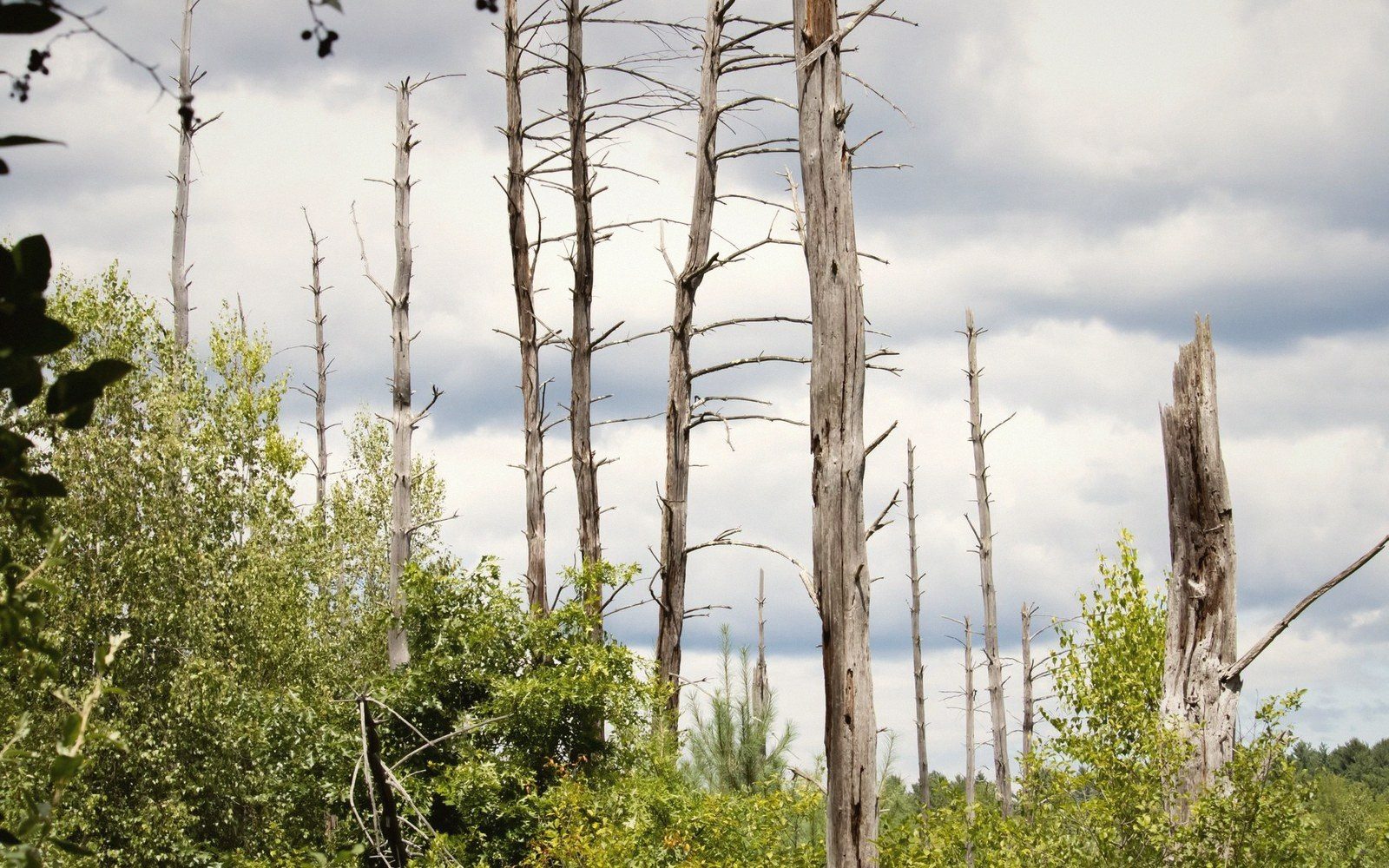
By the late 1980s, the adelgid had reached the high-elevation fir forest across its entire range. The grey standing trunks visible across the summit of Clingmans Dome are the most photographed evidence of the kill; in some stands, mature fir mortality exceeded ninety percent. Young trees regenerate from seed — the root-kill mechanism used by the chestnut blight does not apply here — but reach maturity and are attacked again, and the forest cycles between brief intervals of canopy recovery and repeated collapse.
Chronology of disturbance
- Pleistocene glaciationboreal forest pushed south, stranded on summits at warming
- Mid-twentieth centurybalsam woolly adelgid first detected in Southern Appalachian fir forest
- 1960s onwardmeasurable red spruce crown decline from acid deposition
- Post-1990gradual spruce recovery documented following emissions reductions
Red spruce faced a different assault. Acid deposition from mid-century industrial pollution leached critical nutrients from already-thin soils and damaged foliage directly. Orographic lift concentrates atmospheric pollutants at elevation: clouds that form in polluted air deliver acidified water directly to the forest at a higher rate than rainfall alone would.
Spruce at high elevations showed measurable crown decline from the 1960s onward. Reduced sulfur emissions following the Clean Air Act amendments of 1990 brought some recovery, and monitoring by the US Forest Service ↗ and university research programs has documented gradual improvement in foliar condition since the 1990s.
What this forest records, beyond its current distress, is the full temperature range of the last glacial period written in the biology of a living community. The species present — the red spruce, the Fraser fir, the suite of boreal breeding birds, the cold-adapted invertebrates — are each a data point in a natural archive that no other part of the Eastern United States preserves above ground. The isolation that makes the forest fragile is also what makes it irreplaceable.