Older than the Alps
The Appalachians pre-date most of the world's great ranges by hundreds of millions of years — what looks modest from the highway is the wreckage of something enormous.
A Wound That Has Had Time to Heal
The Blue Ridge and its neighbors are not young. The rock underfoot on Mount Mitchell or Clingmans Dome formed during the Taconic and Acadian orogenies — mountain-building events that ran from roughly 480 to 350 million years ago, with a later Alleghanian pulse around 300 million years ago that sutured the continents into Pangaea.
At their peak, the Appalachians may have rivaled the modern Himalayas in height. What stands now — the Black Mountains, the Roan Highlands, Grandfather Mountain — is the root zone of that original range, the deep crustal material that has been coming up to the surface ever since the overlying rock eroded away.
Erosion on that timescale is not a slow disaster; it is simply what happens. The Alps are perhaps 15 to 20 million years old. The Rockies began their current uplift around 70 million years ago. The Southern Appalachians were already ancient before either existed. When André Michaux climbed Grandfather Mountain in 1794, he was standing on Precambrian and early Paleozoic rocks — some approaching a billion years old — that had been ground by rain, frost, and river action since before the first fish developed jaws.
Key numbers
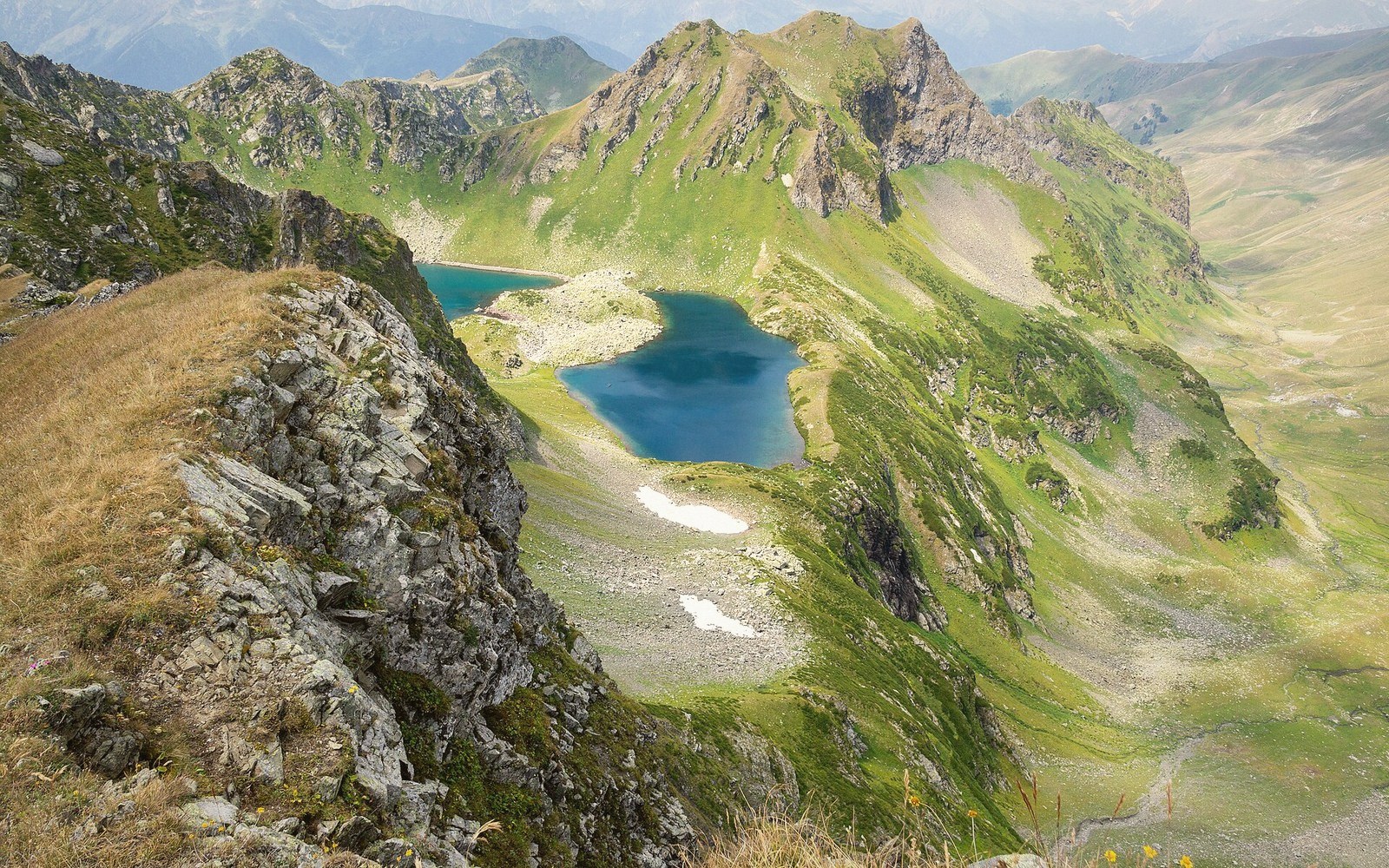
The consequence is a range that is broad, rounded, and dissected rather than sharp and dramatic. There are no glacial cirques here, no knife-edged arêtes; the ice sheets of the Pleistocene stopped well to the north, and the Southern Appalachians spent those glacial maxima as a cold, periglacial landscape rather than a buried one.
Freeze-thaw action was intense enough to shatter exposed summits into boulder fields — the rocky outcrops of Linville Gorge and the broken caps of the Blue Ridge Escarpment record that violence — but the fundamental softening of the terrain is the work of water and time across hundreds of millions of years, not ice.
What Erosion Leaves Behind
A range this old has had time to develop unusual internal complexity. Rivers cut down as the land slowly rose through isostatic rebound — the crust rising as weight above it disappeared — producing gorges that are sometimes spectacular out of proportion to the modest summits above them.
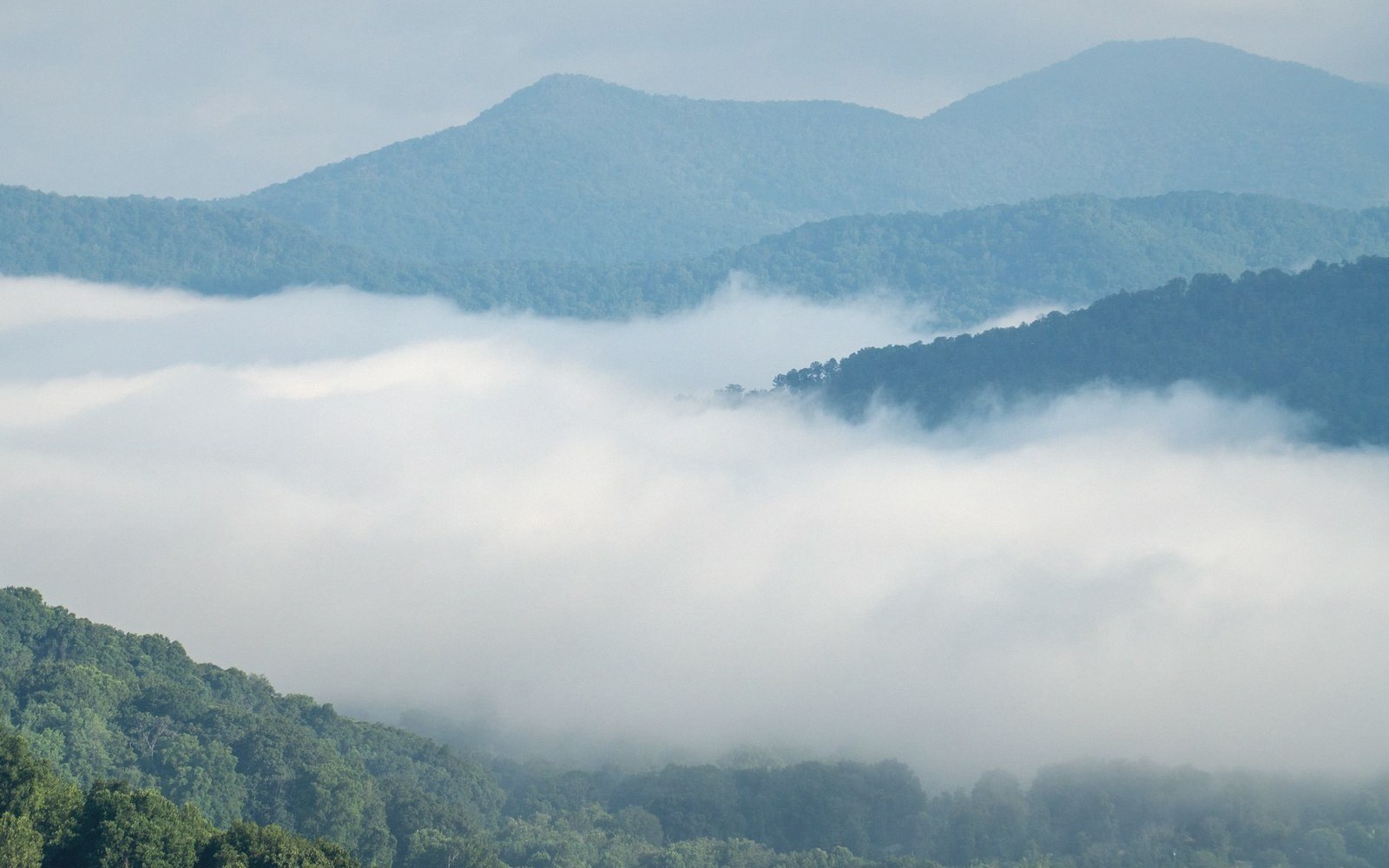
The French Broad, the Nolichucky, and the New River all drain westward across what looks like a ridge they should not be able to cross; they are older than the current ridge, and the ridge rose around them. The New River in particular is often cited as among the oldest river systems in North America, though geologists debate exact rankings, and its age is better understood as very great than as precisely quantified.

The long erosional history also explains the biological richness. Because no glacier scraped the Southern Appalachians clean, lineages accumulated across tens of millions of years. The ice stopping north of here meant that endemism — species found nowhere else on earth — reached levels unusual for a temperate continental interior.
The cove forests that fill the sheltered hollows between ridges carry a tree diversity comparable to much of East Asia, a reminder that these mountains share a deep evolutionary history with ranges that rifted away when Pangaea broke apart. Asa Gray recognized the floristic connection between the Southern Appalachians and eastern Asia in the 1840s, and the explanation — shared ancient ancestry across continents that were once connected — is now supported by molecular phylogenetics in addition to the morphological parallels Gray first described.
Chronology
- Pre-480 MaPrecambrian basement rock forming
- ~480–350 MaTaconic and Acadian orogenies; range reaches probable maximum height
- ~300 MaAlleghanian orogeny; Pangaea assembly complete
- 300 Ma to presentcontinuous erosion and isostatic rebound
- Pleistocene glacial maximaperiglacial conditions; ice does not reach the range
- 1840sAsa Gray identifies the floristic link between Southern Appalachians and eastern Asia
Elisha Mitchell died measuring the elevation of the peak that now bears his name; the Black Mountains remain the highest range in eastern North America, with Mount Mitchell at 6,684 feet. That number is not negligible, but it represents what is left after the most sustained erosion any major North American range has endured.
The original summits are long gone, dissolved into sediment that now lies somewhere in the continental shelf. What the Southern Appalachians offer instead is depth: deep time written in rounded ridges, ancient rock, river systems older than the mountains they cross, and a biological archive that only such age could produce.