Grass where forest should be
Treeless summits scattered through the Southern Appalachians sit below any climate-defined treeline — and no single explanation has held up to scrutiny.
Open ground at the wrong elevation
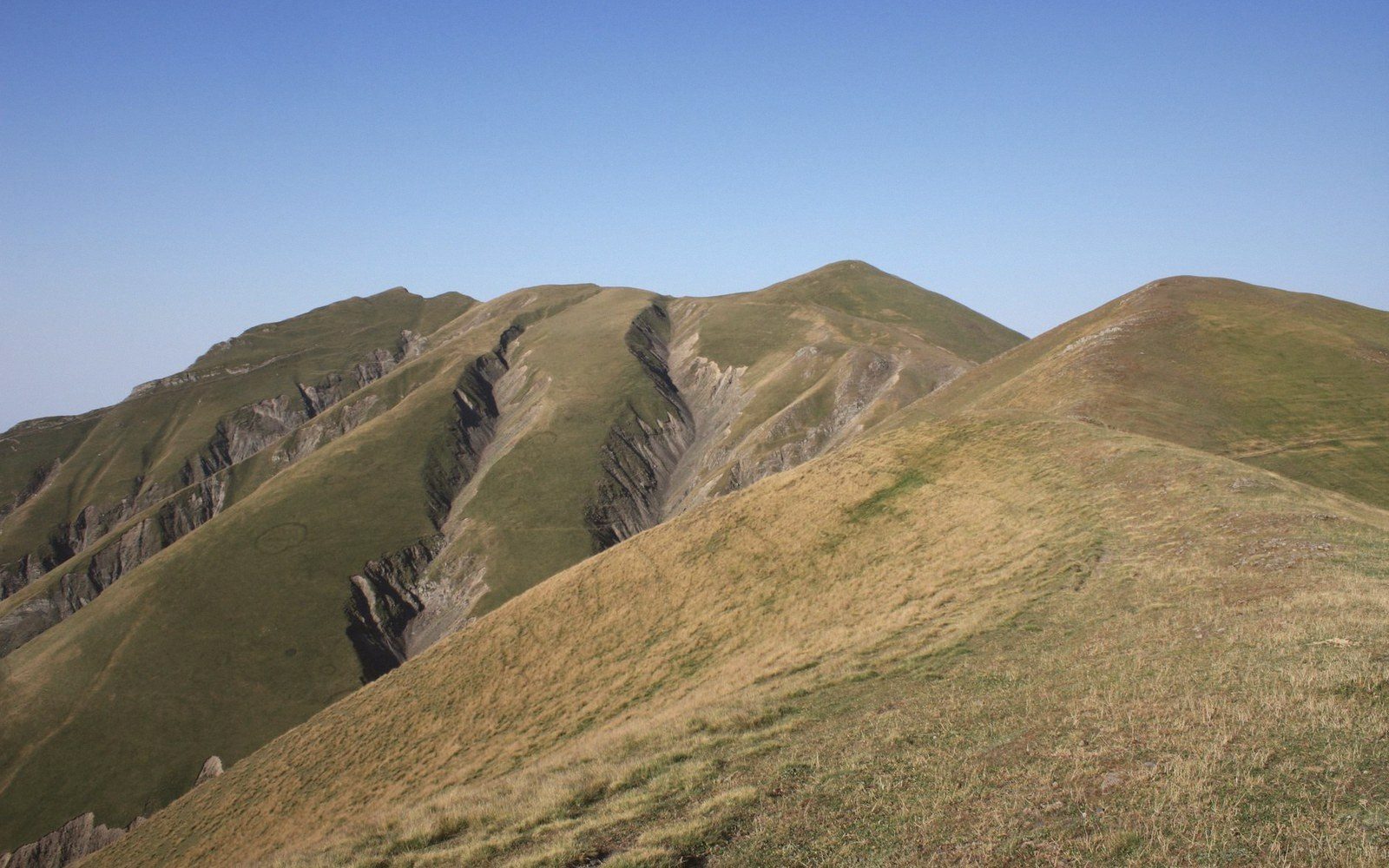
The Southern Appalachians have no natural treeline. Spruce and fir climb to the highest summits; the climate alone would push forest to every ridge. And yet, scattered across the range, there are open summits — grassy or heath-covered, edged by thicket, holding their openness across centuries — where trees simply do not grow. The Roan Highlands carry the most celebrated examples: broad, rolling meadows above four thousand feet, loud with wind and nesting birds, surrounded by a forest that shows no obvious reason to stop where it does.
These are the balds, and they remain one of the more honestly unresolved questions in Appalachian ecology.
Two main types are recognized. Grassy balds — like those on Round Bald and Jane Bald along the Roan massif — are covered in sedges, grasses, and forbs. Heath balds, sometimes called laurel slicks, are choked with Catawba rhododendron and mountain laurel and are more straightforwardly explained: ericaceous shrubs acidify the soil and shade out competitors, maintaining themselves. It is the grassy balds that resist explanation.
Why they stay open
The hypotheses are numerous and none is conclusive. Fire — whether set deliberately by Indigenous peoples or spreading naturally — could have cleared summit vegetation and prevented forest recovery. There is evidence that Cherokee burning shaped vegetation across the range, and the balds may preserve a landscape that long predates European contact.
Ecological stakes
- Grassy balds shrink without active managementaerial photos confirm 20th-century encroachment
- US Forest Service conducts ongoing mechanical removal of woody species on Roan Highlands
- Heller's blazing starglobally rare, distribution centered on these summits
- Bald edges create ecotone between open meadow and spruce-fir forest of high conservation value
Grazing is a related argument: historic livestock use kept balds open through the nineteenth and early twentieth centuries, and that much is documented. But grazing cannot explain their origin, only their recent persistence — and some balds appear in records long before European livestock arrived.
Climatic explanations point to the most recent glaciation: ice-age conditions may have extirpated summit forests, with recovery interrupted by soil impoverishment or persistent winds. A few researchers have argued that certain balds sit on thin, poorly developed soils that disadvantage tree establishment. Others invoke ice damage — rime ice loading, wind throw — as a chronic mechanical force. Competing explanations each find some supporting evidence; none finds enough to exclude the others.
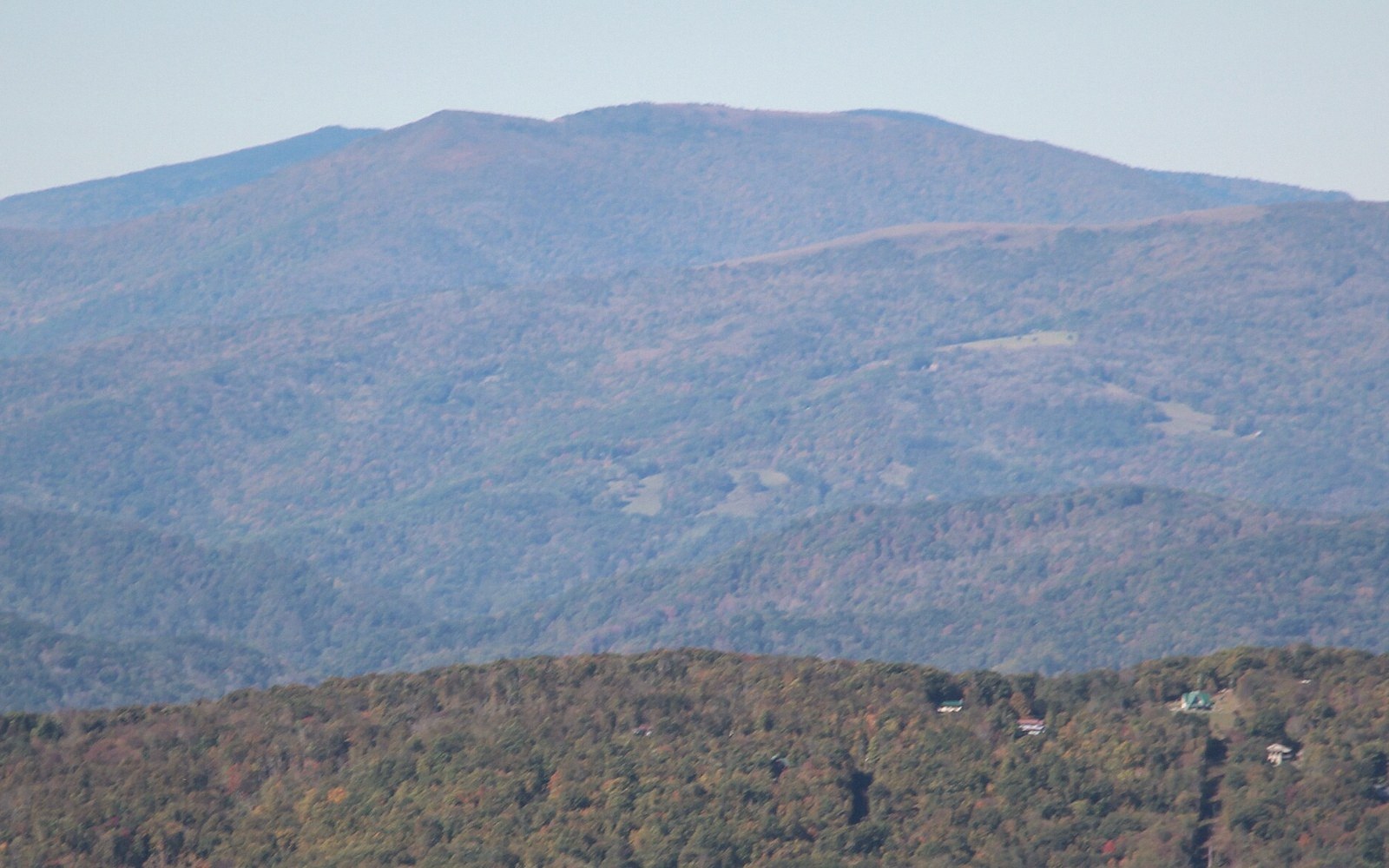
What is clear is that without active management, most grassy balds shrink. The forest advances from the edges. Aerial photographs taken across the twentieth century document consistent encroachment at many sites; balds that were broad in 1940 are substantially smaller now.
The competing hypotheses
- Indigenous burningsustained fire prevents forest re-establishment; predates European contact
- Historic livestock grazingdocumented use maintains but does not explain origin
- Glacial-era extirpationsummit forests lost; poor soil recovery afterward
- Ice and wind damagechronic rime ice loading and windthrow suppress tree establishment
- Soil impoverishmentthin, acidic soils on some summits disadvantage tree seedling establishment
The United States Forest Service and partners have conducted mechanical removal of woody encroachment on the Roan Highlands for decades, recognizing that the balds host rare and uncommon plant species — some of them found almost nowhere else. Whether this management is preserving an ancient natural feature or maintaining a cultural artifact, or both, is precisely the question that remains open.
What grows there
The flora of the grassy balds is ecologically distinctive. Roan Highlands sites support communities dominated by mountain oat grass (Danthonia compressa) and Appalachian sedge, with forbs including Heller's blazing star — a globally rare species with a distribution centered on these summits. The balds also serve as breeding habitat for birds that require open ground, and the abrupt edge between meadow and spruce-fir forest creates structural diversity that neither habitat alone provides.
Asa Gray, who did as much as anyone in the nineteenth century to document Appalachian plant distributions, noted the unusual character of high-elevation open communities here and recognized their biogeographic peculiarity. The balds caught the attention of botanists early because their flora is partly disjunct — species more typical of northern latitudes or of the Midwest prairies appearing on Southern Appalachian summits in no obviously continuous range.
The question of origin remains, in the careful language of the science, unresolved. The Roan balds are managed, studied, and argued over. They are also, whatever their cause, among the most structurally striking features the range produces — open sky on a mountain that has no excuse for it.