Castanea dentata
A quarter of the canopy in places, gone within fifty years of the blight identified at the Bronx Zoo in 1904.
The tree that was the forest
Before 1904, American chestnut held a canopy position across the Southern Appalachians that is difficult to overstate. Estimates of its abundance vary, but in the most productive cove forests and on the drier ridges above them, it could account for a quarter or more of all standing trees.
The nuts — rich, starchy, produced in extraordinary quantity every autumn — fed bears, white-tailed deer, wild turkeys, passenger pigeons, and the human communities that gathered or sold them. The wood was straight-grained, rot-resistant, and fast-growing. Castanea dentata was not merely a tree in the forest; it structured the forest.
The blight that ended this was identified in 1904 at the Bronx Zoo in New York, where imported Asian chestnut specimens had introduced Cryphonectria parasitica, a fungal pathogen to which Castanea dentata had evolved no meaningful resistance. The fungus enters through bark wounds, girdles the cambium, and kills everything above the infection while leaving the root system alive.
The shape of the loss
- Castanea dentatathe American chestnut; a canopy dominant across the Southern Appalachians until the early twentieth century
- Cryphonectria parasiticathe introduced fungal blight; identified at the Bronx Zoo, 1904
- Backcross breedingsuccessive crosses between American and Chinese chestnut to recover dentata form with blight tolerance; American Chestnut Foundation, Asheville
- Transgenic approachSUNY College of Environmental Science and Forestry; wheat-derived gene reducing oxalic acid damage; in federal regulatory review
- Root survivalthe blight girdles the stem but does not kill the root crown; sprouts persist, reaching reproductive size occasionally before reinfection
It spread south and west through Appalachian stands at a rate that still reads as catastrophic in retrospect: within five decades of the Bronx identification, essentially every mature American chestnut from southern New England to the Great Smoky Mountains was dead or dying. A fungal bloom had removed a dominant canopy tree across tens of millions of acres.
Anatomy of a collapse
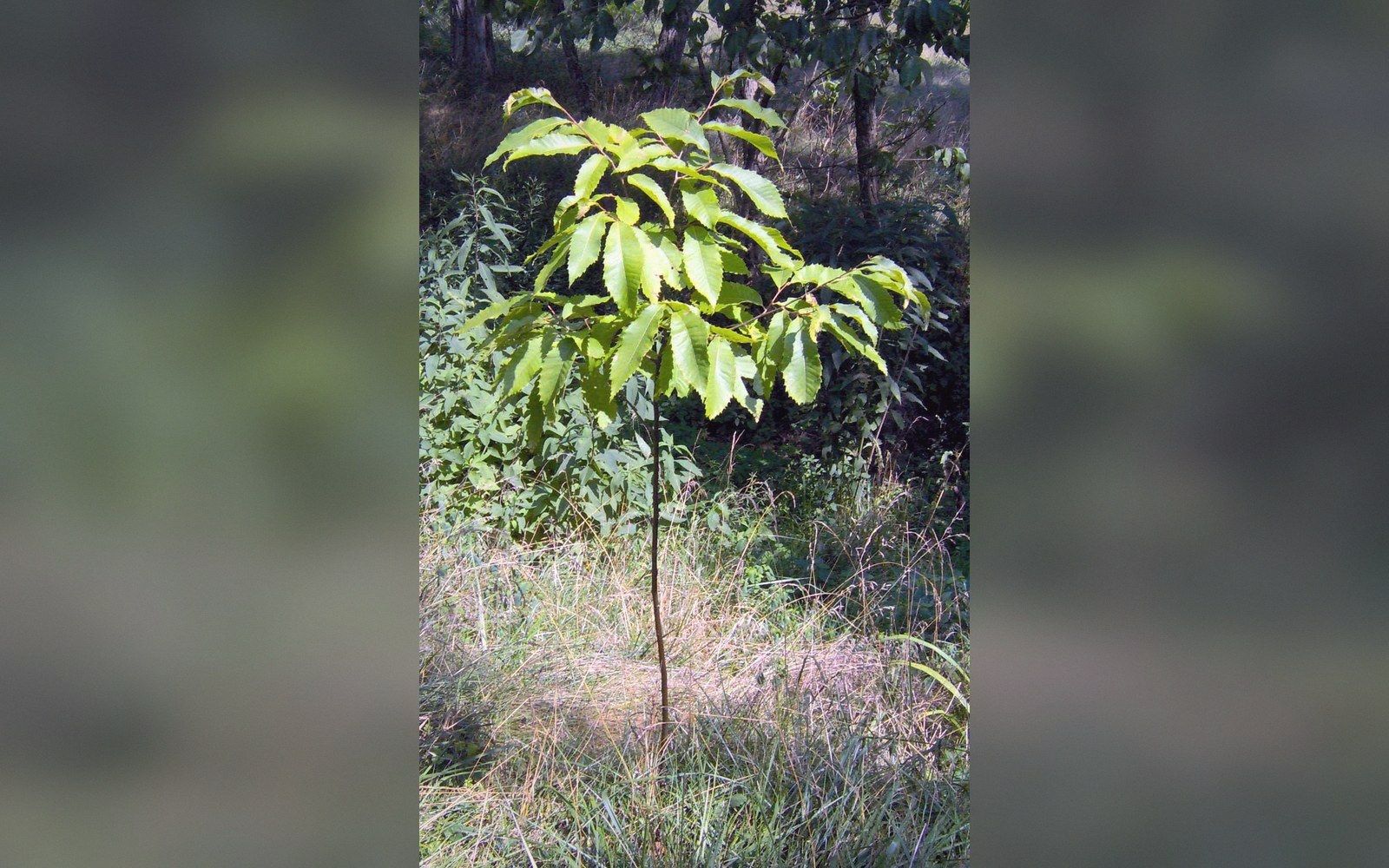
The blight does not kill the roots. That distinction matters enormously for how the species persists and why the stumps still sprout — root crowns continue to send up shoots, sometimes reaching several metres in height and even flowering before the fungus finds them again and resets the cycle. Castanea dentata is, in a strict sense, not extinct. It is present at low stem density across much of its former range, perpetually juvenile, ecologically marginal where it was once dominant.
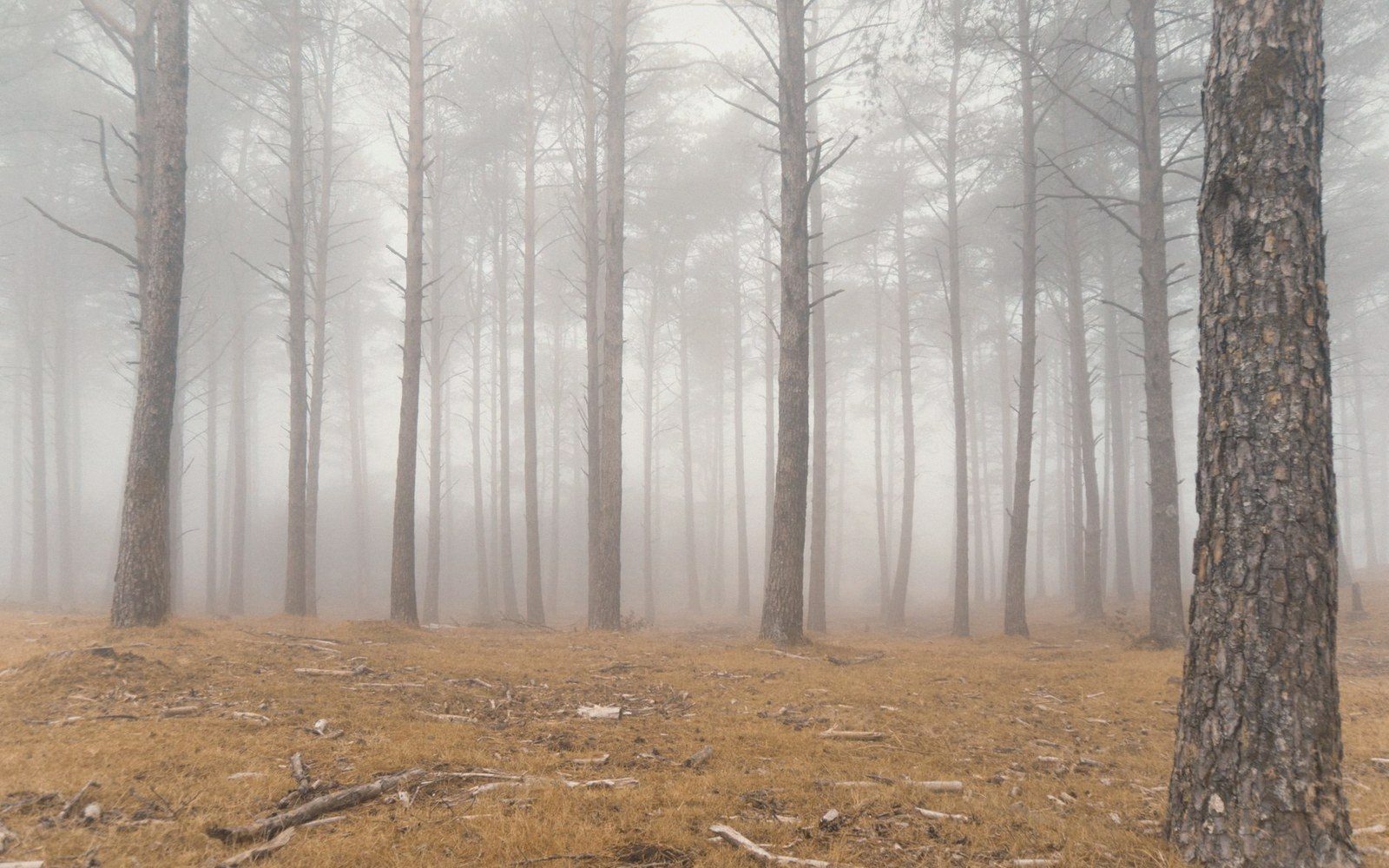
What disappeared was the function. The annual mast crop — billions of nuts dropped across the high ridges and coves of the Southern Appalachians — was gone within a human lifetime. Oak and hickory species expanded to fill the canopy gap, and their acorn and hickory-nut crops do sustain wildlife, but the replacement was not equivalent in timing, quantity, or nutritional profile. The ecological reshaping of the mast community that followed is examined in depth in the guide on what replaced it.
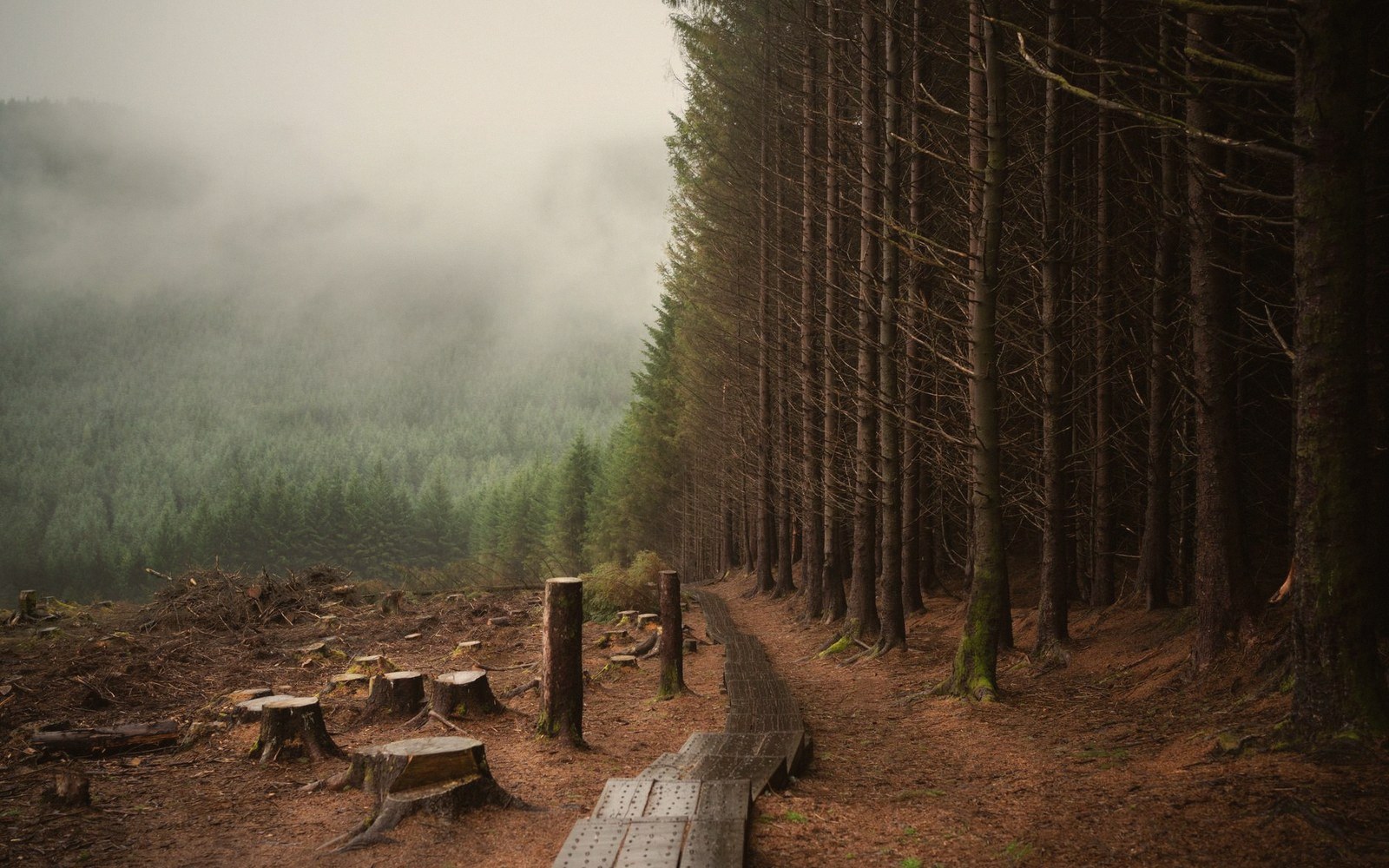
The timber loss compounded the biological one. Chestnut wood had been harvested intensively for tannin extraction, railroad ties, and lumber; the dead trees were processed through the 1910s and 1920s as the blight advanced, and standing snags remained visible in Appalachian forests for decades. By the time Great Smoky Mountains National Park was formally established in 1934, the chestnuts within its future boundaries were already largely gone.
What restoration means here
The American Chestnut Foundation, headquartered in Asheville, North Carolina, has worked since 1983 on a backcross breeding program aimed at combining the blight tolerance of Chinese chestnut with the form and ecological character of the American species. The program requires repeated backcrossing over successive generations to recover a tree that is predominantly dentata while carrying the resistance genes. Field trials are underway across the range, including sites in the Southern Appalachians, but the work operates on timescales of decades and the science of tolerance — as distinct from resistance — is still being refined.
Key numbers
A separate approach, developed at the State University of New York College of Environmental Science and Forestry, uses genetic transformation to introduce a wheat-derived gene that reduces the toxicity of oxalic acid, the compound Cryphonectria parasitica deploys to kill cambium tissue. The transgenic trees performed well in contained trials and were submitted to federal regulatory review; as of the time of writing, that process is ongoing.
No restored tree, however it is produced, will re-enter an ecosystem that held its place for it. The canopy gaps closed. The forest reorganised. What a successful restoration program would introduce is a blight-tolerant tree into a community that has spent more than a century adapting to its absence — a genuinely novel ecological situation, and one that Appalachian ecologists are still working out how to assess.